Showing posts with label Slimbridge. Show all posts

Thursday, 19 December 2013

Northerners, Yanks and Sibes

10/11/13
With news of a Penduline Tit in south wales, plans were arranged with Neil Duggan to head down there and see this stunning example of a male bird.

For those who would be interested, Neil has recently joined the local Blogsphere and can be found here, so therefore, if you want to read about my birding exploits a month before i get around to posting it, or want to follow the birding exploits of a fellow local birder, head over there!

As if by coincidence, Martyn Y (Formally of 'Adult Plumage', 'Regional Birding' and 'Blurred Birder' fame- So many in fact that i'm not even sure which ones which anymore!), Kay D (The Lover of Black Redstarts (Ochruros) ) and Richard P (Local Birding) were also heading down to Newport Wetlands.

While on the M5 though, we heard news of Great Grey Shrike in the Forest of Dean, and with Two-bar Crossbills reported the day before it was worth the effort! Being only a few miles off the M50 it was worth the effort, so with no news having come out from Newport, we took a diversion.

Arriving at Woorgreens was greeted with confusion.

Where do we go?

As we walked up to the somewhat picturesque Woorgreens Lake, i heard the familiar 'glipping' of Crossbills as a flock of 15 flew over. Sadly that proved the be the only view we had of Crossbills, and no-one else found any rarer ones either! 2 Wigeon were the only birds 'of note' on the pool. 

But anyway. To cut a long story short. We saw nothing. The Shrike did a bunk and didn't reappear for the rest of the day. We plodded around the Woorgreens/ Crabtree Hill area for a good couple of hours, but other than calling Brambling and Marsh Tit it was very quiet species wise.

Having contacted the other 'midland crew' down at Newport, it seemed as if the Penduline had done an overnight flit!
Not going to plan!

Right, what now? How about we cross the Estuary to Slimbridge WWT? Some nice birds around there, AND, if the Penduline was to be refound, we would be in a decent position to head down there via the Severn Bridge and the extortionate £6,20 toll charge!

As a lover of all things weird and wacky, my main priority was to get to the Rushy Pen to see the Purple Sandpiper. Within minutes of being on site we entered the Peng Observatory, and upon inquiring about the Sandpiper i was guided onto a wader at the back that looked suspiciously like a Redshank.........

So i then set about scanning the shorelines. Within a few minutes i came to the conclusion that it wasn't there!
At this point, i remembered reading on the site wardens Twitter that the bird was showing down to a few feet from the office buildings. Moving to the opposite side of the 'hide' i poked my head around the corner, and there is was! A mere 10ft away! Insane! A 1st winter PURPLE SANDPIPER!

Not being able to get my scope on the bird due to the somewhat awkward angle, i lifted my camera to my bins and took a few shots.


And its a good job i did! Very soon after, a brief chase form a coot pushed it out, further into the middle and it was then relentlessly hounded by Jackdaws until eventually, it just gave up and flew out towards the Estuary.
And that was it, gone. A far to brief sighting.

So then we walked to the Zeiss Hide, via the 'decoy' area. No Chiffchaffs were showing, so we moved on. A completely packed Zeiss hide were all looking out across the Teal flock. Of which there were a few.....


Yeah, a few in the 2000-3000 range!

And why was everyone looking? Its close new world cousin, a yank interloper was present among the ranks.

After some scanning, i eventually picked up the drake GREEN WINGED TEAL, its vertical white stripe making it stand out quite easily once you knew the basic area it was in. Sadly though, it was very inactive, no doubt well and truly knackered after its long haul across the Atlantic.


The birding from here was actually very good, as thousands of birds were present. Two GCP Common Cranes were wading in the shallows, which, as always, was an awe inspiring sight! However, the more interesting 'stuff' were the smaller birds, most particularly the waders!
Among the small flock of Dunlin we were informed a Little Stint was present, and after some time, a winter plumaged LITTLE STINT emerged from the flock and fed along the shallow waterline.


 Soon after, a winter plumaged SPOTTED REDSHANK was found, wading in deep water at the back of the flash, and, on occasions, swimming quite actively! A flock of Golden Plover flew over, with a small number of Black-tailed Godwit and 6 Ruff.
In the Reedbed, a Cetti's Warbler was showing superbly!

With news of a Great-nothern Diver just down the road, we started to leave, moving again via the 'decoy' area to look for Chiffchaffs. We met up with a searching birder and walked the boardwalk. At the end i became aware of a gathering of birder/photographers on the opposite side of the hedgeline looking towards us.
And it soon became apparent why, as a striking Chiffchaff popped out of the ivy at close range. And by striking i mean a smack in the face obvious SIBERIAN CHIFFCHAFF. Very white underparts with an almost pale grey/light brown back. Actually a very attractive bird!
If i needed any more convincing, the bird spent some time calling, sounding almost like a Bullfinch, and it was joined by a Common Chiffchaff, just further emphasizing how different it was!

Having bagged a good 'cast', we took the last minuite decision to check the Holden tower, where we quickly locacted the Dark-Bellied Brent Goose out on the Saltmarsh, and 23 Eurasian White-Fronted Goose.

So, with the light now fading fast, we decided to hot foot it down to Sharpness Docks, after a while of moving around, we eventually found ourselves at the SARA building, watching a stunnning GREAT-NORTHERN DIVER showing very well on the tiny pool adjacent to the old lifeboat station.
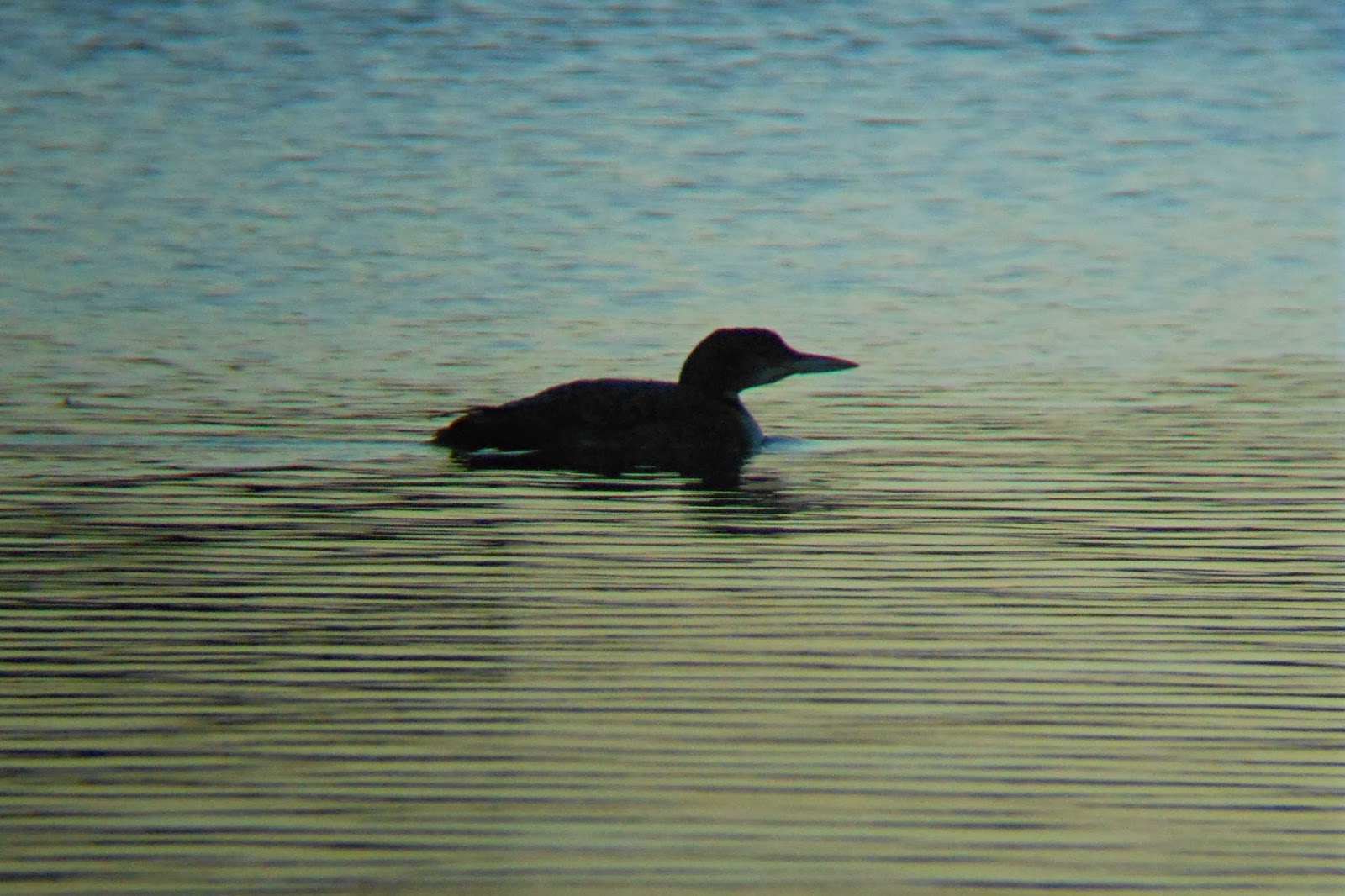


What a way to end the day!
MB

Tuesday, 19 November 2013

Yanks and Sibes!

22/09/13
Anyone that knows me as a birder will know i have a fondness towards waders. And the autumn months certainly bring us some excellent wader action here in the UK.
With our geographical location being right on the edge of the continent, and being the first landfall for many Yank and Arctic waders we are often spoiled for choice. An it was exactly that situation when i heard news of the wader flock developing in the Severn Estuary around Slimbridge. This build up invariably brings a higher chance of rarities and it was when James Lee's, Warden of Slimbridge WWT, found a stunning 1st winter Buff-breasted Sandpiper out on the estuary with the Dunlin flock, when my recent partner in crime (That crime being dirty twitching), Neil D was contacted to arrange an impromptu visit on the Sunday, as access has been arranged out onto the foreshore of the Dumbles to search the flock.

First off, a huge hats off to the Wardens of Slimbridge WWT for allowing this type of access, not only on this one occasion, but for the many times that they have done over the last few years. It certainly was a privilege to be out adjacent to the Saltmarsh scanning the waders. 

As you could imagine, being a weekend bird it was very popular, and just prior to the arranged time the Holden Tower became very full, with the queue eventually stretching off down the Holden walkway. Luckily, we had arrived early and were at the front of the queue.

Soon after we were trudging out onto the shore, and soon after the tide was fast approaching.

And so were the waders.

We were soon surrounded by the sound of Ringed Plovers and Dunlin, and once they were pushed closer i soon started picking out waders.
A pale juvenile CURLEW SANDPIPER was soon showing well in the nearest group, but the search for the Yank continued. Not long after, while scanning the mudflats away form the main bulk of birds i scanned onto an obvious orangey coloured wader. A short quick run through some grass led it out into the open, revealing it to the the BUFF-BREASTED SANDPIPER. A quick shout out was followed by the usual pleads for directions, and it was at that moment i realized why i was a crap twitcher, How the fuck do i get 80 people onto a Starling sized bird in the middle of the mud with no other reference point or adjacent bird other than a small area of saltmarsh grass the bird was feeding in? There really was nothing at all, as i backed away from the scope Neil grabbed a quick look as i tried to navigate people onto the area, but as i was doing so was told the bird had just took flight when my directions became redundant.

Tip one- If on a twitch with me looking for waders, make sure your standing next to me so if i do pick something out you can just grab a look through my scope rather than having to suffer my pathetic directions.

Luckily, the bird was seen again a few times, but again, it was only seen briefly by a select few or in flight, not exactly the most accommodating Buff-breast then when you consider some of them plod around by your feet.

With the 'biggie' now successfully 'gotten' (Twitching slang for the uninformed out there) i relaxed and started going through the rest of the ranks of waders.
The pale CURLEW SANDPIPER was picked out in almost the same spot. And 2 LITTLE STINTS (Both juvs) were feeding nearby.


The warden then moved the gathering slightly to where the main flock were gathered and soon many more waders were being picked out, a nice 'peachy' CURLEW SAND was soon picked out, which was showing nicely.


After around 2 hours i didn't manage another views of the Buff-Breast, but the other mix of Arctic Siberian, Arctic and single yank waders made a very good variety. Among the 100c Ringed Plover, 300c Dunlin we found 4 CURLEW SANDS (3 juvs, 1 ad), 4 LITTLE STINTS (Strangely of the same age combination as Curlew Sand, 3 Juvs, 1 ad).
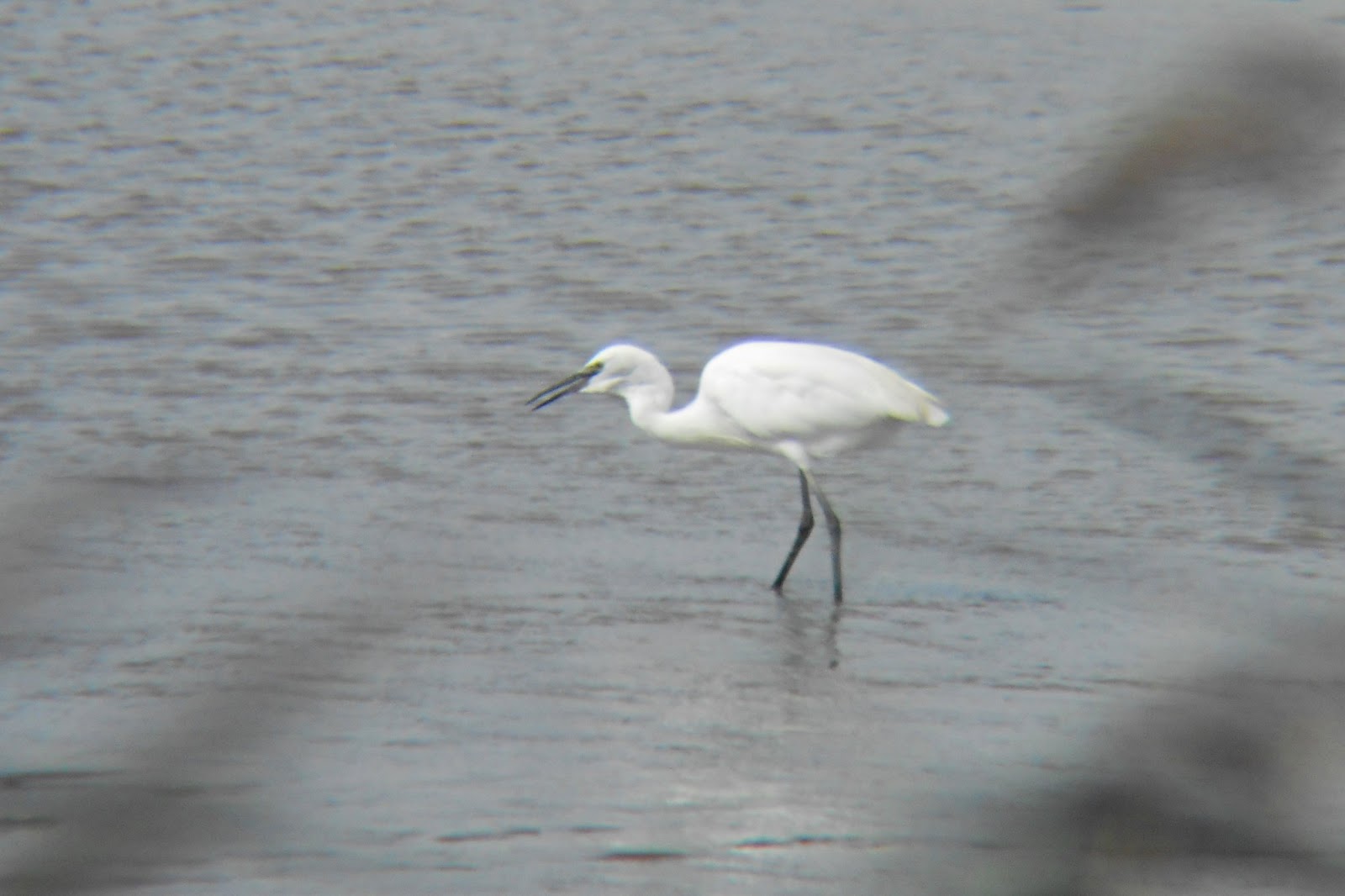
The high tide had also given us 12 LITTLE EGRET and a small flock of Wigeon amongst the expected large numbers of Curlew, Gulls and Geese.
Away from birds, we were surprised by the continued presence of the HARBOR SEAL fishing off the Dumbles throughout high tide.

We then decided to 'work' the rest of the site. A single LITTLE RINGED PLOVER was still showing in the Rushy Pen (we saw it earlier in the morning) with 2 GREEN SANDPIPER and small numbers of Blackwit. 2 Pintail were close to the hide
The remainder of the action was centered around the Zeiss hide, where a wild 2nd summer COMMON CRANE was showing close to the hide, giving stunning views.


 A decent sized flock of Teal, Lapwing and 38 Golden Plover held small numbers of Redshank, but also the hoped for juvenile SPOTTED REDSHANK, showing at the far end of the flash. A large flock of 15 RUFF were also feeding here after flying in as were 2 GREENSHANKS. To finish off the list of waders, 4 Snipe fly in and also started feeding in the shallow water, making that our 16th wader species for the day.

 I dropped into Upton Warren upon our arrival back in the home county, where a nice gathering of 3 juvenile male RUFF were showing close to the hide.
MB

Monday, 2 September 2013

After the Bogey Bird!

4/08/13
For many years, Spoonbill has being somewhat of a glaring omission from my British list, having missed 4 county birds in the last few years, including one by a painful 5 minutes, (meaning i would have been on site and walking to the hide when it flew through), and a further 5 in my journeys around the wider country.

However, a brief flypast of an adult Spoonbill back in May at Titchwell RSPB proved to me that these mythical creatures did actually exist, so, with slightly more optimism i headed down to Slimbridge WWT for the long staying bird with my curse now broken.

And it was straight to the South lake, and as soon as entering the hide, the stunner of an adult SPOONBILL greeted me towards the back of the lake perching on a stump. Initially asleep, it occasionally woke up, revealing the spatula of a bill that the bird possesses.


Still in partial summer plumage, the bird was obviously heavily moulting into its winter plumage. As you would expect for a species more accustomed to southern climates, the bird was irritated by the somewhat crap weather of the day, with heavy rain and cloud.
2 Ruff and a partial summer plumaged Golden Plover joined the 130c Black-tailed Godwit.

Hearing that the juvenile WOOD SANDPIPER was showing on the Rushy, we headed over there, where we hid in the hide from the worsening rain, but the Wood Sandpiper was indeed present with 5 Green Sandpiper.


 After a check of the Zeiss Hide, where we saw the 8 Avocet, a Pintail, and the Wood Sandpiper flew in and joined us.

A scan from the Holden Tower revealed a adult DARK-BELLIED BRENT GOOSE, with 6 Ringed Plover, 10 Dunlin and 6 Common Tern, so then we moved to the Middle Point, with the rain having now ceased.

From here, following the heavy rain, we witnessed a period of vis-mig, and in 2 hours, a total of 42 WHIMBREL flew past the 'hide', all of them calling as they went, a few of the birds dropped down onto the mud briefly before continuing off south. Similarly, a juvenile MEDITERRANEAN GULL flew past us as it headed downriver, but this bird seemed to drop down onto the Saltmarsh. A party of Blackwit (40 birds) were on the estuary, before being flushed and flying off back towards the Center. 4 Little Egret were located out on the mud also, and with the growing number of Gulls, a juvenile YELLOW-LEGGED GULL was picked out on the edge of a sand bank.

MB

Monday, 18 March 2013

Slimbridge birding

18/02/13
With the winter drawing to and end now, and with a few winter specialties having turned up, we decided a trip down to Slimbridge was in order. It was straight to the Holden Tower and i was soon scanning the Goose flock. And it didnt take to long to spot this.


A adult Gypo (Egyptian) Goose feeding out on the dumbles with the White Fronts and Barnacles. Infact, it is the first Egyptian Goose i have seen 'in the wild'. It held my attention for around 10 seconds before i started to look for some of the other Geese. A small pan to the left got me onto a large orange legged Goose within the flock. And i was soon watching the 1st winter BEAN GOOSE. There are 4 species in the picture below, can you pick them all out and name them? (I could have quite easily got 6 had i raised the camera earlier)


I continued scanning, and i picked up the other 2 BEAN GEESE, both adults, and we were treated to decent views of the birds within the 221 strong White-Fronted Goose flock.


The usual array of species was present from here, including Bewick Swan, Pintail, Wigeon representing the majority of the ducks. Waders also were well represented with OYC, 400c Golden Plover (including a few in almost summer plumage). 1500c Lapwing, 700c Dunlin, 30c Redshank, a few Black-tailed Godwit and Ruff, and a load of Curlew out on the estuary. A single Little Egret was showing in the channels.

We then headed over to the Zeiss hide, via both the Rushy Pen and the South lake. A nice flock of Redshank were showing in the Rushy, including a couple which approached the hide fairly closely.


The small flock of Teal was also showing well in the sun.


Similarly, so were a few BlackWits on South lake.


Also on south lake was this stunning flock of 9 Ruff


While walking past one of the 'plastic' exhibits. i spotted a BHG with a leg ring, and upon reading it through my scope i realised i was watching an old friend. BHG 2P33. It turns out i have seen this bird twice before, at Upton Warren in the roost, and most recently, also at Slimbridge back in January 2012.


We had hoped the Bittern would show from the Zeiss hide, but for about the 8th time we drew a blank. We were however greeted by the sight of 4 Common Crane from the GCP reintroduction program  It would be great if these birds were able to colonise the area, as they looked so 'right' in the habitat. One day.


2 Cetti's Warbler were showing in the reeds adjacent to the hide, and we were treated to great if ever so brief views of a rung male as it perched on a reed stem on the edge. A Little Egret was seen distanly from here, and also the Kingfisher hide.
As we walked back, this Grey Heron was showing very well in the stream, despite the hundereds of screaming children only metres away!

We then decided to head down to the 'Severn Beach' area, in the hope of seeing some Owls. We first dropped into Aust Warth in the hope of picking up an early flyer, but non were out, so we quickly headed to New Passage in the hope of a few waders, but other than a few Redshank and a small flock of Dunlin there was little about.
We moved back to Aust, and stayed until dark looking for the Owls, with absolutly no sign of any, despite there being both Barn and Short Eared being seen on both days before and after the 18th.

I was even more annoyed when news emerged late evening of 4 Twite whcih had been present at the top end of the road we were on looking for the Owls, and not a single birder mentioned them being present there.
MB

Tuesday, 22 January 2013

The Big Boost

4/01/13
A dawn check of the patch revealed that the drake Goosander was still roosting on the floods, which was a nice surprise, as my dad had failed to see it over the last week.
Moving southwards towards our eventual destination, we stopped off at Stourport Marina, looking for the Grey Seal that had been seen there, however we drew a blank. In compensation, a nice Finch flock of 40c Siskin and 5c Lesser Redpoll were showing in the riverside birches. Again, onwards, and my next report is from the River Avon at Bredon, where the river had flooded its banks, and in the flooded field viewable from the motorway, i saw a LITTLE EGRET perched in the water!
And again, onward! To our final destination, Slimbridge.

Upon getting to the Center  it was straight to the Tack Piece, as in winter it is by far my favorite area at Slimbridge. You can sit in one of the hides (Robbie Garnett being my preference) and simply scan through the masses for hours, my hope though was to catch up with the Spotted Redshank which was present, as it was a bird i missed last year. Upon reaching the small bridge over the pond at the start to the Holden Walkway, i saw a wintering CHIFFCHAFF! I dont see many wintering Chiffies, so it was nice to see one so early on in the year!
The very decent sized Wigeon flock (of over 1300 birds) was grazing  at multiple locations over the flooded field. However it was the wader flocks that had the majority of my attention. However, a stunning Little Egret grabbed my attention. Always a great bird to see, and one that i am glad to say is regular over southern Britain, soon to be followed by a wide range of other heron species from the continent surely?

Waders were very well represented, most notable were the Lapwings (2000c), Golden Plover (1000+) and Dunlin (700c). This alone counts as amazing birding for a midlander like me, but combined with smaller flocks of other species 60c Redshank and 50 Black-tailed Godwit, and at least 5 Ruff all combine for some excellent birding. 

After a while scanning, i picked up a 'pale' Redshank feeding near the Golden Plover flock, and when getting my scope on the bird, i had confirmed that i did indeed have the SPOTTED REDSHANK, Mission done, time to leave.....


Not really
I got down to trying to get some long distance pictures as the bird waded in shallow water around the Lapwings. Subtly distinctive in winter plumage, Spotshank is always a nice bird to catch up with. I did end up getting one decent photo from the lot, and a little bit of footage


To compare, one of its Common cousins was showing fairly close to the hide!

Having had our fill, we decided to move on, getting into the Holden Tower for high tide....
And it wasnt worth it in the slightest, a count of 120c Curlew, and about 1000 Wigeon were on the estuary  which almost the entire wader flock was flushed off the Tack piece and landed on the far edge of the Dumbles, feeding in the long grass. Both of these sites also had huge numbers of Pintail, with around 500 plastered over both areas! Similarly, Bewick Swans and White-fronted Geese were also in both areas.

Me moved down the the Rushy Pen, where we first spotted a 2w Common Gull. Note the almost entirely black primarys and the bill pattern.

 The stars of the show here though were the Pintail's, of which a few were showing exceptionally close to the hide! Sadly, they spent most of their time asleep  however, when they woke up. Wow! Look at these stunning ducks!

The drakes in particular are stunning!

Wow, nothing more to say!

We briefly stopped at the South Lake, where a large flock of Black-tailed Godwit was present!

Following this, it was onwards to the Zeiss hide for our annual dip on the Bittern. 3 Hours and there was no sign. However, a nice adult Water Rail was nice compensation, which shown regularly at the edge of the reeds, and very close.

It made a change to see one with the sun on it!


As always, i also took some footage.


A small number of the 173 White-fronted Geese were feeding on the seawall, with the estuary as a background.

As always, large numbers of Teal, Wigeon, Shoveler and Pintail were also on the flash here. And this activity meant we were treated t a great fly through of a brute of a female Peregrine!

With the day drawing to a close, we briefly stopped near the rowing area to drink our tea. And this proved a good decision, as a Cetti's Warbler was flitting about the reeds!
MB

Thursday, 20 September 2012

Slimbridge- American Wader, Ducks and Harrier.

28/08/12
Our annual late August visit to Slimbridge was held today, and it combined with the presence of a decent rarity. I had been keeping a fairly close eye on the bird reports from the @Slimbridge_Wild Twitter page and the WWT website, and i was quite dissapoined that the Wader flocks that usually build up at this time of year on the estury had not really materialised, combined to that the fact that high tide was just as the centre closes, i knew that esturine wader's might not be noted.

And i wasnt wrong!

Just starting on the way down i was checking twitter when a new tweet popped up, Spotted Crake and Long-Billed Dowitcher showing from South lake hide. Awsome, be there in 40 minuites!

We arrived to a rather full south lake hide, and i was informed that the Crake hadent shown, and the Dowitcher was hidden amongst the sleeping Godwits, of which there was a 200 strong flock of!
We stayed in the hide for about 1 1/2 hours hoping the Crake would show or the Dowitcher would emerge. Eventually, the LONG-BILLED DOWITCHER did  wake up, and walk from behind a Godwit, showing itself briefly before heading back to sleep.
On this, we decided to wander.
Wood Sandpiper has been abit of a bogey this year, and i havent caught  up with one. However, one had been showing from the Robbie Garnett hide for a few days now, an easy tick and run, surely?

NO
 
 
Combined with the Crake, these two birds were the most stuborn birds of the whole day, and we spent hours looking for both!
 
 
We walked up via the Rushy, where i quickly spotted a female GARGANEY dabbling with the Teal. Briefly, it swam into the close bay in front of the hide, and i was treated to great views of this migrant duck as it swam around briefly, before swimming back with the rest of the Teal.


From here though, it briefly went downhill. We stopped off at the Robbie Garnett hide, and spend a good hour looking for the Wood sand, apparently it was frequenting a small 30ft stretch of the shore that was hidden by reeds from the hide!! Ahhhhhh.
 
We then moved into the Holden Tower, were a brief, distant flypast of 30 Dunlin was the only esturine wader activity of the day!
 
We dropped into both the Robbie Garnett (Still no Wood sand) and the Rushy (Garganey now at the back), where 2 PINTAIL were showing right at the back of the pool.
 
While walking through the 'Birds of a suspect origin' sections of the centre it became obvious that most of the birds from the Zeiss hide had been flushed while we were just heading over there!
We scanned the Lapwing flocks, and picked out a few RUFF and a GREENSHANK, most of which then landed on the South lake. Anyway, we continued our journey to the Zeiss, were i had my dinner that i had prepared, a nice Cheese and Ham Bagguette, lovely.
As expected there wasnt much birdlife here as much of it had been flushed, however, initially, 3 RUFF were grounded among the Lapwings.


But, just about when i was finishing my Bagguette, a further 4 RUFF flew in, giving us a total of 7 birds infront of us. A single GREENSHANK was also here. Scanning through the flocks of Duck was quite uneventful, no Wigeon, no Pintail.

Thinking i might try my luck at the Crake again, and to now be able to get some photos of the Dowitcher as the sun had moved slightly away so hopefully the birds wouldnt be silouetted.

Well i'll just say what happened, another hour, another no sign of the Crake, and my worst nightmare was unfolding, the Godwit flock was still sillouetted! But i though i cant leave without at least a record of the Dowicther, which wasnt showing particularly well.


A very nice number of Waders were on the South lake, and it was great to be sifting through the large numbers of Lapwing and Black-Tailed Godwit's, picking up RUFF'S, GREENSHANKS 80c Redshanks and Green Sandpipers. and of cause, the LONG-BILLED DOWITCHER, which was now feeding.


As i said, most of the wader flock (Including the area with the Dowitcher) were in strong sunlight which was bouncing off the water, and i could only get backlit shots of the birds.


Hoping the light would be better later in the day we left so that we could walk to Middle point, stopping at each hide on the way up. The Garganey had now dissapeared, and a longish stint in the Robbie Garnett one again revealed no Wood sand.
However, this Hawker sp Dragonfly was showing on reeds infront of the hide, another 'Odonta' (I believe thats how you spell it to add to the digi-scoped list!
 
 We walked down the Holden Walkway to the Middle point, stopping halfway to view from a gap in the hedge where you could see some of the 'invisible shoreline' where the Wood Sand was. And amazingly, we could see the WOOD SANDPIPER! However distant, but still, i finally got it, about 4 hours after first trying to see it!
 It was obvious there wasnt going to be any waders other than a few distant Curlew on the estury, however, i find that the Middle point 'hide' is a nice place to have a sit down, you really do think your miles away from civilisation, and , with it being a 'wall to wall' blue sky day, it was a nice place to just have a  nice stop and wait.
 
We noticed abit of commotion over the dumbles as the Curlews and the Gulls 'got up', and i quickly scanned over there and saw a 'Buzzard' circling quite high up. After abit, i looked again, as i wasnt particularly certain over its ID. And by now, it had came closer and it wasnt just a Buzzard like shape now. I quickly noticed its tail looked strangely long, and its wings sightly odd, but i couldnt tell why. But the bird was still sillouetted.
I thought that the bird looked 'odd', so decided to call to 'get onto this Raptor'. By now though i had glimpsed a pale head, and called out MARSH HARRIER!. The bird then proceeded to circle above our heads, by which time i'd got the bird in my scope, and i enjoyed great views of a new species for me! Tick 1 off the 'Bogey List'
The bird, then slowly dropped lower as it flew past us, over towards the 100 acre, dropping down behind the tree line.
A very large Gull flock was developing on the mudflats to the north, however way to far away to ID, and 2 LITTLE EGRET's were also showing far to the north. However, we got lucky as another LITTLE EGRET had chosen to hunt the small pool just infront of the viewpoint.


2 PEREGRINE were flying, and perching around on the mudflats.
Moving up to the slightly higher viewpoint behind us on the Seawall, we scanned the fence lines, and i picked up 3 WHEATEAR, which is always a nice addition to the day list. I again looked to the north, and i picked up the MARSH HARRIER hunting low over the reeds at the 100 acre area that you can see. A few more views were had as it moved back and forth over the reeds.


I wanted to have one last look for the Crake on the south lake, and to cut a long story short, the bird didnt show again untill after closing time, by which time we had arrived back home. The LONG BILLED DOWITCHER was still showing and feeding, but slowly became less active.


The wader flock had grown further since we were last here, and the 230 Black-Tailed Godwits were joined by, 3 Greenshank, 80c Redshank, 3 Ruff, which was a nice little list. 
 
 
Highlights for the day were:
LONG BILLED DOWITCHER
MARSH HARRIER
Wood Sandpiper
Garganey
2 Pintail
3 Little Egret
9 Green Sandpiper
1 Common Sandpiper
c80 Redshank
4 Greenshank
7+ Ruff
3 Wheatear
 
MB