Showing posts with label Common Gull. Show all posts

Saturday, 30 August 2014

June & July - The Upton Warren roundup

June & July 2014
With the grip of the summer doldrums in place, birding took a far more relaxing approach, and with that came a fair bit of local general wildlife watching, navigating across from our avian delights, to our inverts, and to our plantlife, and I rather enjoyed it.

Upton Warren I look as one of the most productive, and educational sites in Worcester, and what better to do during the quiet summer months than keep track of the breeding birds, and enthuse about them to locals and semi-interested day visitors!

The major news from this summer at Upton Warren has been the successful hatching, and subsequent raising of a massive 10 Shoveler chicks, the first time the species has bred at Upton Warren since 1947. A truly remarkable occurrence, and hopefully this years bumper success will promote breeding in future years.

It is still even possible to see these local superstars (which made local newspapers, radio shows and possibly even the local TV news) as I write this in the dying days of August. They may even stay around for the rest of the winter now?

As always, the first returning waders of the year are making an appearance, and Green Sandpipers were typically on time, with some spanking adults dropping in for extended stays on the flashes, often showing superbly from the hide. In the two 'J' months, I had a peak count of 10, but this increased further in August which will be covered in an upcoming post.


For the 3rd year running a ringed Common Sandpiper made an appearance for a few days, showing how site faithful some species can be, particularly waders!


And the first few Common Snipe started to appear in the channels adjacent to the hide at the flashes, typically showing well out in the open as migrant birds often do.

 A juvenile Ringed Plover dropped into the flashes in front of me one evening, which proved incredibly productive!

It could often be see within the same scope view as a number of Little Ringed Plover, but sadly all of these were raised elsewhere, with all the earlier chicks having been predated.


Wader wise my personal counts peaked at, Avocets- 45, Little Ringed Plovers-8 and Common Sands- 5 and up to 21 Curlew. Oystercatcher raised 4 chicks and Lapwing were also present, but Lapwing being quite scarce and hard to come by, but occasional counts of up to 30 were seen as the autumn flock built up.

Gulls have been high on the agenda, and there has been an almost continual presence of Mediterranean Gulls throughout the summer as a few 1st summer birds have been loitering around with the Black-headed Gulls. The Little Gull remained for some time also, but had disappeared by mid July.

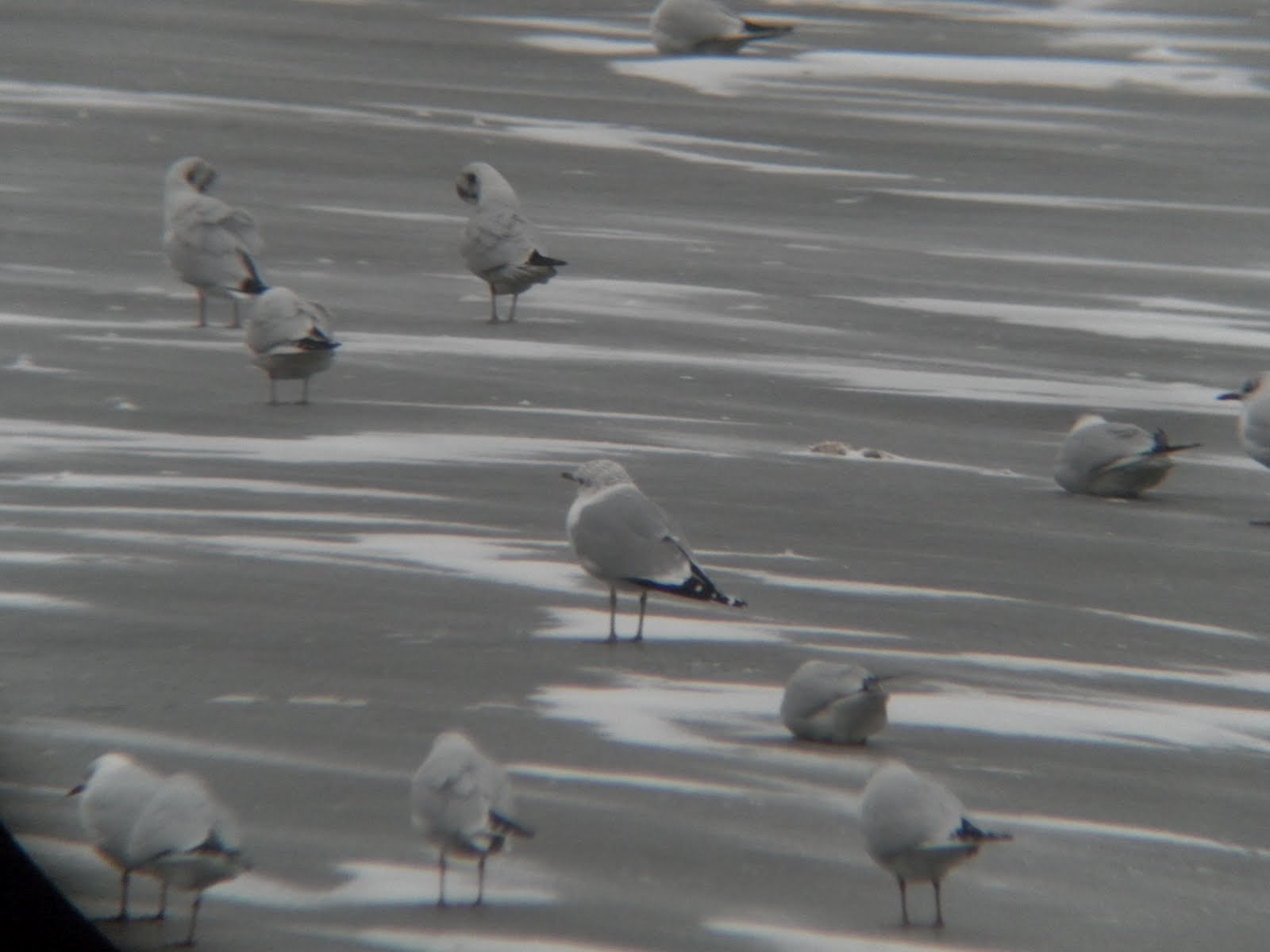
Towards the end of July, I was lucky enough to locate the first juvenile 'Med' Gull of the year in the flashes roost, on the same evening as the Ringed Plover. The roost also held 2 2nd summer Common Gulls that night, so I certainly was kept entertained. 


Away from birds, it was a very poor year for Orchids around the site, with only 2/3 Bee Orchids flowering, and around 30c Common Spotted. Pyramidal was unfortunately not see this year, but it is quite normal for Orchids to flower in some years and not the next.
My undoubted butterfly highlight were 2 White-letter Hairstreaks that were present when I looked adjacent a small colony of them. A recent colonist to the reserve and a pleasure to see.
MB

Monday, 28 October 2013

Catching up (AGAIN!)

As i'm sure you have all come to expect of the blog over the last few months, it has become fairly inactive. Much of my time has been fairly full recently and a recent change in personal circumstance has left me with very little motivation to do anything, particularly blog orientated work. I appologise for the complete lack of posting, and i will try to create a regular routine again.

21/08/13
A day out around Cannock chase was rewarded with 5 Spotted Flycatcher around the car park.


We then moved onto Blithfield Reservior, where i luckily stumbled across a juvenile BLACK TERN as it hawked over the water to the north of the causeway. A further exploration of the area produced, Little Egret, 5 Ringed Plover, a juvenile Ruff, 5 Yellow Wagtail and a single Tree Sparrow. Aside from the Black Tern, my other personal highlight was seeing my first Clouded Yellow butterfly.

23/08/13
6 Willow warbler (4 juv) were nice to find on the patch.

Later that morning, i headed to Grimley Camp lane pits, where 3 Little Egret, 6 Ringed Plover and 4 Yellow Wagtail were showing.

Following a period of work, i then headed to Upton Warren for the Roost, where a single LRP was 'hanging on', Ringed Plover (Ad and Juv), Dunlin,7 Green Sand and 2 Ruff.


The only passerine of note was a Lesser Whitethroat.

24/08/13
The following night, i again dropped into Upton Warren for the roost, the LRP and the 2 Ringed PLover remained, as did the Dunlin but Green Sandpiper numbers had increased to 8. A GOLDEN PLOVER flew north over calling which was a nice addition to the list. 2 1st winter Common Gulls roosted with 1000c BHG. The Lesser Whitethroat also remained.


25/08/13
A early morning vismig session was very quiet, a single Common Gull was seen briefly and a Lesser Whitethroat was found.

For the last time of the weekend, we dropped into Upton Warren as they were having somewhat of a wader fest. The highlight goes to a flock of 6 RUFF, but vismig in action was shown by 2 juvenile Dunlin which dropped in.

MB

Wednesday, 14 August 2013

Worcestershire MEGA! 500th Post!

Wow, 500 blog posts! Its hard to believe at the beginning i would reach 500 posts. Thankyou for your ongoing support and i look forward to the next 500!

3/08/13
Upton Warren flashes was the destination as a Worcester MEGA had taken up residence, So upon our arrival i headed straight for the feeder hide, after briefly stopping near the bridge to listen to a begging juvenile CUCKOO.
Once in the hide, a wait ensured, but my hopes were not high as it starting to become late evening 7pm, and the feeders were almost inactive. 3 Greenfinch were all that kept us entertained.

That was until i spotted a brown tit species in hawthorns to the left of the feeders.

The 'WILLOW TIT'!

Sadly, now a very rare bird within the county, being classed as extinct as a breeder, and no longer has any regular location within the county boundaries! Therefore it was great to be able to catch up with one of these species within the home county.

Additionally, it also produced me the 2nd of the species 'pair, that is Marsh and Willow in the same county in 2 days, not the easiest of feats nowadays!

Having seen the target, and watched it for some time, we moved onto the main hide. Waders were well represented with 7 species, with 7 Avocet, 7 Green Sandpiper, 4 Common Sandpiper and 3 Redshank being the highlights.

We had to wait until very late in the evening for the Gull roost to produce anything, when a pair of adult Common Gull dropped in around 9pm, spending a short period on the deck before flying off south.


MB

Thursday, 14 March 2013

Gulling with local birder's

17/02/13
Local Redditch birder Neil Duggan had kindly offered an evening out at the biggest Gull roost in the region, at Chasewater, and Matt G the Ealswood Birder and i tagged along in the hope of jamming in on some of that White winger action, and checking a few of the nearby Gulling sites in the hope of picking something up.

We were meeting at Upton Warren, and i got there early to have a check of the Flashes. A Lapwing flock was commuting between the fields and the 2nd flash, making it awkward to get a decent view from the feeder hide. Upon exiting the hide i was watching 2 Goldcrest in a trackside bush when Matt walked down the path towards me that he'd just had a Golden Plover in the Lapwing flock! We moved back into the feeder hide and started scanning the Lapwings at the back of the flash, and there it was, a Golden Plover sitting among them! We watched it walking around in the flock before taking flight and giving us some nice views. Cue a digi-scoped record shot.


Heading north, we first dropped into the West Midlands gull hotspot of Stubbers Green which was practically devoid... A few Great Black Backs and Lessers. Errr, not the best of starts.

It was still some time until the roost, so we then headed over to my new found Gulling spot, at Kingswood lakeside. At least we had Gulls this time! But again it seemed out luck wasn't there, as in the flock were only the expected Herring, LBBG and BHG. Scanning the Gulls flying up above the tip i got exited when i saw a Gull with white wing tips circling with about 10 other Gulls. Sadly however, it didn't seem to be one of the true white wingers. Despite having obvious white wingtips, the had a fairly dark grey 'saddle' on its back, obviously wrong for either of the hoped for species. The bird was at some distance however, but in good light we agreed to call it as an abbarent gull sp.
A lot of the birds were staring to fly over to Chasewater so we decided to follow in the hope we would have more luck there, and then it just got worse. The birds had obviously decided to pitch up at the furthest reaches of the Reservoir, right at the north end, making viewing from the south end almost impossible.

2 Goldeneye were showing fairly well


As was this Common Gull

A adult MEDITERRANEAN GULL was picked out of the closest large flock of BHG at the end of the dam. A stunning 90 % summer plumaged bird, with bright white primary's and an almost fully black hood. If you ask me, one of the most stunning of the small Gulls, and probably one of my favorites!

As the light got worse, i picked up another adult MED Gull, this time a winter plumaged bird, which i believe Neil got onto, but quickly disappeared within the flock (A very common occurrence at Gull roosts). These two alone made my day as it was the one Gull that i had missed on previous roosts this year, so it was nice to have caught up with two of them!

Going back onto the large Gulls they had still failed to move any closer. A adult Yellow legged Gull was showing in the birds in front of the sailing club but that's as good as it got. Many birder's didn't even bother to stay around as they knew the task was almost impossible. But the three of us soldiered on until dark, with absolutely no reward. The day got even worse later that night when news emerged on what the gullers had seen from the west shore.

So yeah, not the most 'to plan' day you could have had, and it is a real shame that we didn't pick up any white wingers, as at the time any would have been lifers for my companions. Sorry i couldn't get you them, i'll just have to owe you a repeat visit so we can get them!

MB

Thursday, 17 May 2012

Mediterranean Year tick.

29/05/12
News of a 1st winter Mediterranean Gull at Upton Warren emerged, and as luck would have it, the bird was still showing when i arrived in the late evening,
The MEDITERRANEAN GULL was showing decently from the main hide with the small flock of mainly non-breeding 1st summer BHG. The bird showed unusually bright bare part colours for its age, and its seemingly advanced moult ( faint carpal bar markings and not very prouounced tertial markings) and bard part colours hinted towards quite an advanced plumaged bird


I watched the bird for some time as it preened and swam around in the pursuit of the local BHG.

A taster of a typical roost scene (below) Can you name and age them all? (Quite an easy one)


As the light was now very weak, it made it very hard to get any decent footage/ photos of the bird. and when news came through that the SEO had just been seen again, we soon headed off. However, an unseasonal male Shoveler was showing at the back of the flashes


We spent some time in the 'archery field' at the back of the sailing pool, however, in 45 minuites, the SEO failed to reappear, which was a shame.

A Swallow was showing well on the jetties outside the sailing club building.
MB

Wednesday, 22 February 2012

Fill In

4/02/12
Called in at a frozen Stubbers Green lake.
No interesting gulls in the 30 mins we had before the weather got too bad to withstand!
MB

Monday, 6 February 2012

Bartley again. (White-winger Heaven)

3/02/12
After having only brief views of the Iceland Gull the previous friday i wasnt really happy, sure i'd ticked the bird for the year, but there was something not quite right, I fancied another Look.
We accidently arrived at the dam end of the reservior, but quickly found this to be to our advantage, with many of the small gulls alot closer in, however, the large gulls again seemed in the middle of the water. However i was soon scanning 70% of the thousands of gulls (the remaining 30% were into the setting sun),
and after about 20 mins, at 4:55, just as i was saying to a visiting birder that Iceland Gulls had been seen, i panned onto a white winger.
A 2nd winter ICELAND GULL
I quickly get the rest of the 'crowd' onto the bird, of which for one of them it was a lifer!
The light was still Ok, with it being perfect for a gull roost, and i was able to take a long range, shakey video of our white winged beauty!

This bird was quite easy to point out, as it spent the whole time near to the yellow boyd in the water.
However, as time went by, it became more and more obvious the there seemed to be two different birds in two areas of the flock, however it took untill 5:12 for me to confirm this, when both birds appeared within my scope, and i was able to get this image containing both of them!
My first double 'white-winger' day!
Now wheres my Glauc?
MB

Monday, 16 January 2012

The BIG boost

2/01/12
Slimbridge
After a brief watch of my Garden feeders (Previous post) we headed down to slimbridge.
Upon Arrival, we headed to the Rushy Pen, as the Lesser scaup was seen here while we were driving down, however, it (and practically all the Ducks) had gone, There was only a few BEWICK SWAN'S and 100c PINTAIL here.
So then we headed up towards the Tack piece, where the majority of activity was, There was proberbly about 5000+ Birds on the flooded field, Thousands of Lapwing, Wigeon, Teal, But also the largest flock of GOLDEN PLOVER ive ever seen 1600+ Birds in a tight scrum. A pair of Buzzards often flew across the field and the sight of so many birds in the air at once was breathtaking!


With the ranks of Commoner birds, there was 800+ Dunlin Intermixed, 40c Redshank, 30c Black-Tailed Godwit, 200c Curlew (Including birds on Estury) and 8 RUFF, including some 'white' males.
We then headed up to the Holden tower, and viewed the Goose flock, 210 Eurasian WHITE-FRONTED GEESE were here, with hundreds of Shelduck, Greylag, Canada and Barnacle Geese, However the 'Gypo' Egyptian Geese seen the previous day were nowhere to be seen (still to see a Gypo Goose). an Adult Peregrine was out on the Mudflats.
I was going to scan the Long ground pool as i remembered last winter the lesser scaup spent alot of time on there, but the sun was bouncing off the waters surface and you couldnt see anything,
Anyway, i heard news the Bittern was showing from the Zeiss hide, so we headed over there. By the time we had got there, it had moved back into cover, and the next painfully cold 1 1/2 hours was Bitternless, 2500+ Lapwing, and loads of Teal and Wigeon were in the field to the left of the hide but otherwhys it was quite!
News then popped up that the Lesser Scaup had been refound, on the Long Ground Pool!!
So we gave up on the Bittern and headed over for the Scaup
A quick look in the small hide next to the 'In focus' Shop saw the PINTAIL's extremly close.

Once in the Holden tower, the sun was on the pool again, so i took a video of White-fronted Geese feeding on th dumbles.

Eventually, a small flock moved onto the small pool in front of the hide, giving great views.
The sun Died out, and in the brief spell i manadges to locate the 2nd winter female LESSER SCAUP asleap with Tufted and Pochards, It soon woke up however, and i saw the huge white base to its bill, I quickly got as many people onto the bird as i could before the sun came out again. When the sun came back out we realised we hadent been to the South lake, so we walked down there for a look, a few Dunlin, Redshank and a single Blackwit & Great crested Grebe. However, there was also an adult COMMON GULL will the BHG flock, and i speculated whether it was the adult bird i saw the last time i visited?!?!?
With the sun lower in the sky, we went up for another look at the LESSER SCAUP.
Via the Knott hide, where a Wigeon flcok was only a few metres from the hide! (video is 0x camera Zoom on a 27x Eyepiece)

We got back up the Holden tower, and were treated to OK views of the LESSER SCAUP as it swam around. However this time i spent much more time guiding people onto the bird, for people who didnt know where it was (or didnt know the stand out features of Lesesr Scaup) it took an awfully long time to get them onto it. But eventually everyone in the hide saw the bird, and was left happy about the bird that had crossed the Atlantic to winter for its 2nd winter at Slimbridge.
The bird was too far away to even bother trying to get a photo!
Interestingly, i saw 2 ringed birds, a BHG with the leg ring 2P33 and a White-fronted Goose with a neck ring (YUM). The BHG almost certainly came from Cotswald water park at is it very similar a number to one i had a Upton, and with it being the same colour aswell (White, Left leg), it looks likely.
Highlights:
120+ Bewick swan
210 White fronted Goose
200+ Pintail
3000+ Wigeon
2000+ Teal
1 LESSER SCAUP
1 OYC
1600 Golden plover
5000+ Lapwing!
8 Ruff
1 Common Gull
4 Ravern
All in all, a very good start to 2012!
MB

Wednesday, 2 November 2011

PIED WHEATEAR!

26/10/11
As i have already hinted at, As a planned trip to Gloucestershire was already in place, it was a remarkable stroke of luck when a decently rare bird was found nearby!
So after our ounting to the Capital of plastic birds we headed further down the A38 to a place beside the severn estury
Oldbury on severn
The sailing club was nestled n the banks of the river in quite pleasant surroundings, flat open ground, mudflats stretching far into the river, just north of the the Severn bridges in the distance, and looking north to a Power station,
We walked down to the crowd, and i soon saw the bird, a Superb PIED WHEATEAR feeding atop the roof of the sailing club building.
A Gathering of people was expected, can you spot yourself??
The bird was constantly active, but sometimes stopped and stood still, enabling me to get some photo's:


For me, one of the standout features was the tail pattern,(video grab below) which was obvious even to someone with very limited 'wheatear experiance'. with Northern and Isabelline wheatear being the only others i have seen. But the 'grey' ish tone was also quite outstanding too, I dont class myself as being particuarly good at 'feather detail' Id, being better at Looking at the 'whole' bird, but i did noticed the primary projection was really long! and the bird became quite distinctive, even when a female Northern WHEATEAR decided to join it.

Sometimes the bird would drop down onto the ground and give superb views, often less than 30ft away! However, when on the ground, it was even more active than on the roof, and with the increasing bufferty wind, it became harder to gain decent photo's/Video's

However, it wasnt just the Wheatear on show, as mentioned, there was also a 'northern'
A stunning female MERLIN flew through over the top of the sailing club and onto the estury where it decided to have a chase of a Redshank, It flew up the channel behind us, giving stunning views and flew further up and being lost to view, still chasing the Redshank!
A sinlge Rock Pipit was here also, A scattering of Dunlin on the shore, and a Grey wagtail and a Common Gull flew over, we decided to leave just as the rain was about to hit, lucky we left at the time we did, because it rained heavilly!
A happy twitcher :) Rare bird showing amazingly, nice light (untill the rain) and Non of the crowd being dickheads, what more can you ask for?
MB