Showing posts with label Barn Owl. Show all posts

Tuesday, 31 March 2015

The catch up- January 2015

Yes yes, I know. Here we go again, 5 weeks without a post.
 
The usual excuses are again exercised, Uni work, and to busy with actual fieldwork to update here. So here we are, another catch up post!
It's better than nothing!
 
1/01/15
After a night partying into the new year, I found myself stumbling through the city centre early the next afternoon after waking at a friends flat. It was straight down to West Park, where I managed to grab a few 'new year' ticks. Nothing special, but highlighted by the wintering Pochard and Shoveler.
 Throughout January I was visiting West Park with regularity, so I wont be commenting on every visit, as the details from which are very monotonous and 'samey'.
 
3/01/15
 
The next birding adventure was pursuing one of my winter pastimes.
GULLS!
Bartley had an Iceland Gull visiting, so it didn't take much coercing to get my ass over there. With most of the Gulls at the west end, I moved around to view through the fence and here I met all the usual assemblage of Gullers. Nothing interesting had come in yet.
 
With the sailing boats having retreated back to dry land for the night, the gulls started drifting out, and so did most of the birders to the usual viewpoint off Scotland Lane.
A matter of minutes after, and I picked up the regular 2w Caspian Gull nice and close in. Needless to say, a few decent views (gull roost standards) were had, and soon after the guys up on Scotland lane picked it up also.
 

Again not much longer after, a return call came, the Iceland just dropped in!

We rushed around the corner, but the bird had flown. Having already set my tripod up, I chose to run the 100 or so metres to the high ground, and a little bit of scanning and BINGO!

3rd winter Iceland Gull!

Very distant, but shining like a beacon among the throng of white, grey and black.

I even managed a couple of record shots (literally!) showing the bird.


Iceland Gull (Red) and Mediterranean Gull (Black)
 
A Med Gull was called from near the bird, but no-one other than the finder managed to see it. That was until I reviewed my photos 2 months later and found the bird in question in a matter of 10 seconds. Ah, how easy is this Gulling lark when you don't have to contend with field conditions and  freezing shanking hands! Needless to say. I'm not counting it, but a great reminder about how birds can so easily go 'under the radar'.
 
4/01/15
Patch birding followed, which boosted the year list significantly, gathering a couple of decent patch birds in the process in the form of a Snipe and a flyover Yellowhammer. The Lapwing flock in the quarry had levelled out to 54.
 
6/01/15
With the Great-Northern Diver still being in residence at Ryders Mere, it would have been wrong to not visit right?
 
So I found myself on a muddy shoreline getting cracking views of the juvenile bird as I made my way to Chasewater for the roost. A really nice supporting cast of birds here also, which shows just how top quality this site is, particularly so being within an urban area!


Moving onto Chasewater, it actually turned into a very productive visit. Highlighted by a 2nd winter GLAUCOUS GULL which arrived quite late in the roost. White wingers have been particularly scarce in this area this winter in comparison to the last few years, so to get both within the first week of the year was good going! Add to this, 2 Caspian Gulls and 2 Yellow-Legged Gulls. A very good if very cold visit!

8/01/15
Following a session in West Park, I moved around to Parkes Hall, where a flock of 15 Goosanders (4 drk) greeted m. The Mute Swan remained (the first site record!) and a good flock of 28 Moorhen remained.

10/01/15
A little bit of dirty twitching, or actually, lets rephrase that...  I dropped into Worcester Cathedral to pay homage to the long staying, and often elusive Black Redstart. It was actually the first time I have visited the Cathedral to look for a 'Black Red', which are present most winters. I have heard tales of peope  dipping this birds regularly, but within 15 minutes, up popped the bird, quivering tail and all, out in the sun above the Stonemasons Garden. Cracking scope views were had as it flicked, flycatched and shimmied along the ledges. Always a real treat!

Having just brought a digiscoping adaptor from the Birders Store down the road, this bird was my first 'subject', and it chose to be very obliging.


(Literally the first photo I took with the new adaptor in 'field conditions;)
 
I spent all the time I possibly could with the bird before the time ran out on the parking meter, during which she preformed admirably!


Wanting to try out the apaptor further, we moved around the Upton Warren, where, as luck would have it, a 1st winter drake Pintail had dropped in for the day! Not a bird I see at Upton regularly, so very chuffed with that stroke of luck! A Little Egret was also still around.


I tried my luck with birds on the feeders, and this stunning mossy male Greenfinch probably turned out the best.


11/01/15
Another day, another visit to the mecca (Upton Warren that is). The first work party of the year, and with the allure of Jack Snipe, who could resist. Prior to work, we undertook the usual Snipe count/flush, which proved very productive, with 15 Jack Snipe, and 40+ Commons!

Now before I get rolling eyes and 'that look', it must be said that these counts are an intrinsic part of our management regime, and without them, we would never know if the habitat management is working. And as anyone can see from these results, it really is!

Birding was limited throughout the work party, but a Great-Black backed Gull flew over, a very scarce yearly visitor to the Warren, so a great tick to get under the belt so early.

The usual after work birding party moved to the Moors to finish the day, where our luck was in! At very last light, a BITTERN clambered its way to the tops of the reeds. Having had a Bittern found dead only a few days before we were very relieved to still have a bird on site. Infact, it was my first at the Warren in almost 2 years! A great way to end what is always an enjoyable, if hard day!

12/01/15
Another visit to West Park called, and I finally connected with the 2 Ring-necked Parakeets that had been hanging around for a while. Somehow they had managed to elude me for two weeks, but eventually nice views were had of them sqwarking on the island.

Moving onto Stubbers Green, it was very uneventful bird wise, so the less I talk the better. Hitching a ride with a friend and his companion, we then moved around to Ryders Mere, where I took a 3rd helping of Great-northern Diver. Still present and accounted for...


Having just arrived, we walked to the nearest birder, who informed us that he thought he had a Caspian Gull. Guiding me onto the bird and I was faced by an absolute cracker of an adult bird! A real classic. 'Daz white' head, small beady eye, long parallel edged bill and best of all, a huge dollop of white of p10, with that classic white tip. Stunner!


Our main target though had been eluding us, so with only 5 or so minutes of usable light remaining, we rushed around for another viewpoint on the western shoreline.
Plonking the scope down, 3 seconds worth of scanning....

"GLAUC"

Everyone was on the bird, but the reason I had came up again was to get some video. (It had been showing well for a number of days). Unfortunately it wasn't too close, and annoyingly, wherever it had been foraging it had picked up some dirt on one of its right primarys, and given how dark it was, this was only exaggerated. Not the footage I had hoped, but it gives me something to improve on!
 

16/01/15

Visited Chasewater again in the hope of finding the two headlining Gulls for Mike. Unfortunatly the Glauc was a no show, but Mike picked up the adult Caspian from a couple of nights before. After a winter of trying, I also managed to see the 'White winged' Herring Gull, which was pottering about near the powerboat club.

17/01/15
A rather uninspiring afternoon wardening at the Warren. The usual array of birds were present, but this Blue Tit beside the hide was looking stunning.


18/01/15
What January would be complete without a visit to Slimbridge WWT. With the weather not being particularly cold (despite my hands still telling me it was!) the numbers of birds around the reserve had not reached their usual peaks, with many having short stopped on the continent.
 
Even though not of the usual size, many of the flocks were still of huge size so certainly gave me something to scan through throughout the day! A flock of Little Stints had been hanging around with the Dunlin flock for much of the winter, and I managed to locate one fairly quickly, rather obligingly pottering about in the long grass pretty close to the hide.


The Goose and Swan flocks have been particularly low. Only around 100 White-fronted Geese were on site, add to this only 80 Bewick's Swans and you can see what I meant with my earlier statement. A single Pink-footed Goose was found however, lumbering about at the back of one of the pools on site.

 
3 Avocets were the first to return to the site this year, and while watching 2 GCP Common Cranes from the Sloane Tower, a distant Barn Owl started hunting the reedbeds around the Zeiss Hide, rather confusingly, at around 12:30 in the middle of the day!
 
A Kestrel was showing very well from one of the hides, but unfortunately the crowds in the hide meant the floor was shaking like crazy!
 
 
22/01/15
A walk down to West Park was livened up when this stunning Gull decided to drop onto the pool! A stunning Mediterranean Gull. A great bird for such a site, and luckily it hung around well into the winter so all could come and admire it. Funnily enough, just before I scanned the Black-headed Gulls I remember saying "Wouldn't it be funny if there was a Med Gull in that lot".... A matter of 15 seconds later and I was calling out there actually was a Med Gull in there! Amazing!


23/01/15
Having noticed the Med Gull was ringed as it flew off, I returned the following day in the hope it would visit again, and luckily, on my very first scan, there it was, perched out on ice revealing its leg-ring code to be PNU9.The midlands seen to have a track records with these 'PNU' birds. I have previously seen PNU4, and PNU5 has been seen a number of times, so this bird made the 3rd PNU bird to be seen in the midlands within only a few years. These Polish Med Gulls certainly do like the midlands!


The bird was seen throughout January, and continued to visit until at least the 17/02.


While trying to find the Med Gull for a friend, we were caught in a heavy snowstorm. This Shoveler looked about as happy as I was to be in such weather. (Grim)

 
31/01/15
The last afternoon of the month was spent at Upton Warren, looking at the Gular pouch angle on Cormorants. Such a glamorous life.
 
This Cormorant however, was looking absolutely fabulous!


MB

Friday, 26 December 2014

Norfolk! Steppe Grey Shrike! (3-5/10/14)

It was with great kindness that I was offered a weekend away in Norfolk by a local birding family and recent birding partners in the start of October, and it was eagerly anticipated!
 
Following the long drive across over to mid Norfolk, we first stopped at Sculthorpe Moor NR, where a Purple Heron had been residing. However, it was clear very quickly that the bird had not been seen, with gloomy faces all around, and unfortunately, there was very little to make anyone too exited.
 
A Golden Plover flew over, as did a Fieldfare, but after what felt like a painfully long time on the reserve we decided to leave, knowing our luck would be better tried elsewhere.
 
So we moved quickly onto Cley Marshes, which improved the day somewhat very quickly. Even from just our first glances at the sea, it was clear that there was significant amounts of Geese moving, with hundreds of Brent Geese flying offshore, flock after flock!
Similarly, Wigeon, Teal and Common Scoter were all moving, proving very easily that winter was on its way. 2 drake Eider flew past offshore. which was a long awaited year tick after missing them on every coastal visit this year!
Small numbers of Red-throated Diver had started to appear, with some feeding relatively close in as the tide rose. Also on the upcoming tide, 2 Guillemot drifted past.
 
 
Good numbers of ducks and waders kept us entertained as they flew around the marshes, constantly harassed by 4 hunting Marsh Harriers.
 
One of the spectacles of North Norfolk I had always wanted to experience though was that of the Pink-footed Goose roost. With a few small to medium sized flocks seen flying over during the day, we fancied our luck at Burnham Ovary Marshes, and we were not disappointed.
 
We arrived with plenty of time to spare, and we quickly located the Black-necked Grebe on the pool next to the seawall, as well as good numbers of waders, which were commuting between the pool and the estuary behind us. A few Snipe probed the reeded edges of the pool, and a Water Rail sauntered across the gap as the sun began to set, and the real show began!

 
With the light fading, we very quickly noticed large numbers of Little Egret, Grey Heron and particularly Cormorant flying towards Holkham. Eventually, we spotted another of our targets for the weekend, 3 very distant Spoonbill as they dropped into roost with the other birds in the trees. While these birds were flying east, the Marsh Harriers were going the opposite way, and 8 flew west as we stood vigil on this high point.
 
The Starlings started to murmerate in front of us, and then it began.
 
Geese!
 
And more Geese...
And more..

 
By nightfall, and estimated 15,000 Pink-footed Geese had dropped in to roost at Holkham, a simply breathtaking spectacle!
Add to this the superb flight views of two Barn Owls, this is why we love Norfolk right?
 
 
We were up bright and early the next morning, and our first destination of the day was the superb site of Holme Dunes NNR. The tide was out, but on the turn, so the attention turned to scanning the beach and the sea. Again, large numbers of Brent Geese were moving, as were Wigeon and Teal, but we were treated to a nice range of other species, 3 Eider powered past, as did a female Red-breasted Merganser. It was also a pleasure to see 3 each of Arctic and Sandwich Tern, both moving east along the shoreline, but unfortunately the real targets eluded us. On the water, Red-throated Divers, Great crested Grebes and a good count of 7 Guillemot were bobbing about like corks.
 
The lack of our targets however was more than made up for by the huge numbers of birds on the beach. Hundreds upon hundreds of waders. Huge spiralling flocks of Knot, with smaller numbers of all the regular seashore species. More than enough to keep us midlanders happy!
We did have a Spotted Redshank and a Whimbrel fly over calling though, and 2 Greenshanks were feeding on the pools. Among the extensive Gull flocks feeding on the wet sand, a single adult Mediterranean Gull added some variety.
 
Moving away from the sea, our attention turned to migrants, and it was obvious (as we had predicted), with the winds in the wrong direction, and clear conditions, we were not going to be in for a 'migrant fest' this weekend. However a rather dapper Whinchat did its best to keep us entertained, with little bit ands bobs vismigging over.
 

Following a drive around Choesley, where at least 5 Grey Partridge, 2 Golden Plover and 2 Yellowhammer were found we headed to the mecca that is Titchwell RSPB.
 
We covered both the pools and the sea, with good numbers of wildfowl being present. The reeds adjacent to the benches was 'alive' with 'Pings', and it didn't take long for its source to appear, and we were treated to some good flight views of at least 5 Bearded Tits. A single Common Tern flew past offshore, as well as the now expected Red-throated Divers. With a rather daunting weather system developing though, we hot footed it back to the car.
 
 
As planned, after dumping a lot of rain on Norfolk, and as we had lunch back at the Hostel in Burnham Norton, the clouds broke, and it was a beautiful day once more!
 
Being just down the road, we moved back to Titchwell RSPB for the high tide and Harrier roost.
As you come to expect with Titchwell, a number of the birds are very habituated to humans.
 
A Little Egret shown well..

 
As did a rather smart Bar-tailed Godwit.


Scanning the muddy shorelines led us onto the two Little Stints which we had missed earlier in the day, but as expected, much was repeated from earlier in the day. 3 Common Scoter were seen from the beach, as was 2 Guillemot, but Skuas were still managing to avoid us.
 
We moved back to the reedbeds, where Bearded Tits were pinging, Cetti's Warblers singing, with both Marsh Harriers and Starlings pursuing in aerial acrobatics as they jostled for roosting spots.
 
It was a rather stunning sunset also!

With a slight change in wind direction forecast for our final day, we planned our attack strategy, and were again out by dawn....
 
Sunrise over Burnham Ovary was rather spectacular, with thousands of Geese, Wildfowl and wading birds flying out of their roosts. Pink-feet were calling as we got out the car in still near darkness and a single Barn Owl took its last flight of the night as we walked down the track.
Over 100 Little Egrets flew past us as we stood scanning from the raised viewpoint. 70 Egyptian Geese flew off the pool, where the Black-necked Grebe was still present. The same great variety of waders was present as our last visit as we slowly made our way along the embankment.
 
A few birds flicked up onto the fencelines as we walked, Meadow Pipits and Stonechats, and eventually we found our first 'migrants' of the day, 2 Wheatear.
 
 
A large covey of Grey Partridge were flushed from behind a ridge, which then flew out into the fields opposite where they dropped in and became invisible once more.

We moved out into the dunes to check Gun Hill and the sea. A quick scan along the shoreline revealed the expected waders, and the sea was again rather quiet, other than a passing flock of Sandwich Tern.
Unfortunately, our migrant search came a blank, and the scrub held very little. Moving back towards the car, a party of Bearded Tits was pinging in the still conditions.
 
Wanting to be that little closer to home, we decided to move onto Titchwell RSPB, where we had heard there had been a bit of movement on the sea with some Whooper Swans and Little Gulls. Moving up the track, we managed to log all the species we did the previous day, including the 2 Little Stint again as we moved up towards the beach. Perched distantly atop the Sueada on Thornham marsh, a Whinchat and a Stonechat perched side by side.
 
With a large crowd overlooking the sea, I jokingly made a comment about them no doubt having seen multiple Skua's fly past this morning as we walked past, to which a lady replied to her friend "Did you see the Skua's (insert the friends name)".
 
As you would expect, I took this as somewhat of a joke, but the look on the old couples faces proved otherwise.
They had had a passage of Skuas that morning!!
Doh!
 
Having recounted my woeful story about dipping them all weekend, I quickly got a reply saying that someone was watching one on the water now!
Panic!
 
Scope set up, and then it flew....
 
Directly into my scope view! A juvenile Arctic Skua! Ok, not a Pom or a Great as I had hoped, or even a Long tailed as I have dreamt, but it was a Skua!
 
With a Black Redstart having been reported out at Thornham point, we bode farewell to the large crowd (no doubt missing a bucketload of Skuas going by our luck) and headed out there. Unfortunately I didn't see anything of it, however a couple of the group did. I rejoined the group, but before we went looking for it again, Liz shouted out some rather unexpected news. A possible Steppe Grey Shrike had just been reported near where we had been this morning!
 
Mega eek!
 
Decisions were made. At worst it would be a Great Grey, so we went for it, wading through mud, across dunes, jumping down a 15ft cliff where the dunes had been washed away and the long 2km trek back to the car! Some real paramilitary action!
 
Nobody knew about the Shrike as we walked back to the car, so we mentioned it as we walked briskly past. It was rather fun watching people spinning on their heals and changing course for the car park!
 
A drive later, and another brisk walk and there it was!
Perched distantly on a hawthorn in the middle of a field, a STEPPE GREY SHRIKE!!
 
Even from this distance, it was rather obvious. The colour hues to its plumage were off in every respect. It was almost a peachy/ sandy colour! It obviously had more white in the wings, but I just couldn't see the lores due to the distance.
 
But that didn't matter, as after being ousted from its perch by a Kestrel, the bird repeatedly moved closer to the ever increasing crowd. Until eventually, you were getting simply stunning views!
 
No denying those pale lores!! 


What a perfect way to end the weekend!
 
Again, a huge thanks to Rob, Liz and Luke for a great weekend! Some great birding was had! I'm sure one day I'll get to pay you back.
 
Same time next year?
 
MB

Wednesday, 19 February 2014

#The Midlanders are coming! (Yet again!)

25/01/14
The opening month of the year is always an exiting one for me! And it was with great excitement when 3 of the 'crew' from our last #TheMidlandersAreComing expedition exchanged plans to thrash the North Norfolk coastline. Any birders dream!
 
So, around 4am, the journey started from deepest Worcestershire, and having met the other 2 of our crew, Gert, Neil, Mike and me started burning up some rubber eastwards!
 
Our first destination was one of Royal stature, as we pulled into the small, country roads of the Sandringham Estate. Needless to say, the shady atmosphere was on heightened by a number of cars being parked at awkward angles on the verges and the regular slow drive pasts of a number of similarly shady looking vehicles, with many occupants gazing anxiously down the roads.
Our reasoning for being there on those country roads, surrounded on all sides by large rhododendrons was perhaps no less shady. We were in search of a glimpse of the gaudy Golden Pheasants which inhabit the area.
Having sat in the car for 30 minuites, the sun now up high in the sky, and with no sign of anything 'Golden' we decided to leave, as, if i am honest, the sight of lines of non-native hedgerow were boring us.
So we drove up to the coastal 'resort' town of Hunstanton, where there was significantly more in the way of wildlife!
Our arrival was greeted by thick fog, but from the car we spied 2 Dark-bellied Brent Goose on the beach, as well as Redshank and Bar-Tailed Godwit.Having found a suitable parking spot however, we walked the promenade north, where we were greeted by the presence of a stunning flock of around 150 Dark-belled Brent Goose, with their evocative call piercing through the fog!


From the far north end of the Promenade, we quickly found at least 5 Fulmar on and around the cliffs, but we quickly became distracted when the fog started to lift by the sea. Around 30 Bar-tailed Godwit were feeding at various points along the tideline, as were numerous Sanderling, Redshank, Oystercatcher and Turnstone. A single Ringed Plover flew past, and Dunlins were also moving through.
 
With the fog having now, we were able to scan the sea, and soon our list of ' desirble' birds was increasing. 20 RED-BREASTED MERGANSER were feeding offshore, as were a few Great-crested grebes. Good numbers of Teal and Wigeon were flying past distantly, and these included 4 Shoveler, a single Goosander and oddly, 2 Mute Swans! Certainly the latter i was not expecting on a seawatch!
 
Next up, it was further north east along the famous coast road. Holme Dunes.
 
On the pool immediately opposite the car park a Greenshank was feeding, a species i have never previously caught up with in January! The pool also hosted healthy numbers of Little Egrets, Redshank and a couple if Bar-tailed Godwits, with more on the tideline. A wisp of 4 Snipe flew over us and our first Grey Plovers of the day were feeding from the wet sand.
 
 
Hundreds of ducks and geese were feeding in the fields behind the beach, mostly comprising of Wigeon and Teal. The Greylag flock held a single Pink-footed goose, but my main highlight was getting decent views of at least 3 MARSH HARRIER, including one pristine, stunning male! In my opinion, Marsh Harrier are one of the best breeding birds we have in Britain, and i still always get that moment of excitement when i pan onto one!
Bring on the day they're breeding in the midlands!

A single Buzzard, Sparrowhawk and a fly through Peregrine completed the bird of prey list for the site!

Next it was onto the site of our first twitch. Burnham Ovary, where a certain Buzzard was currently in residence. It felt somewhat blasphemous driving past Titchwell RSPB without stopping, but our plan was to take shape!

Our scanning for Buzzards was fruitless, with only 4 Commons seen, but it was more than made up for by 2 stunning RED KITE which drifted in and hunted over 'Gun hill'. In common with the aforemented Harrier, Red Kite must go down as one of the most graceful birds to watch, gracefully swaying its tail from side to side to adjust its trajectory as it sweeps low over open fields, and this time having a backdrop of the North Sea!
 
 A single Barnacle Goose was feeding in the fields, as was a large flock of Brent goose,but with time wearing away, and with their being no sign of our main target, we took a unanimous decision to head inland.
Why?
A long staying party of PARROT CROSSBILLS have taken up residence in a wood just on the edge of Holt country park. However, before we had gotten to far from Burnham we drove past Holkham, where we managed to 'tick' Egyptian Goose for the day without even slowing the car!
 
 With some excellent map reading skills from Mike, we arrived at the location of Edgefield woods without any problem!
 
A short walk later and a small crowd appeared staring into the tops of pine tree's. It took a matter of a few seconds to realise where the birds were, and soon after, we were all getting decent, if often obstructed views of 4 PARROT CROSSBILL as they fed in the tops of the tree's


 They really were quite a pain to get a decent view of! Looking almost vertically to see a bird jump from one branch to another! Occasionally however, the birds would appear in the open, showing off their massive bulk, which, even though there were non for direct comparison obviously dwarfed Common Crossbill (2 flew over calling)


Having all been satisfied with this life tick, and having got decent views, it was time to head off again. We had to pay homage to the Norfolk birding gods.

Titchwell here we come!
We rushed straight to the beach, which was sadly looking very different to the last time i was here! The recent tidal surge had all but destroyed the dunes, so much so that it is not an exaggeration to say there were non! The power of the sea!

Luckilly however, the surge did not damage the main reserve, unlike the fate of many other reserves along the coast.
 
The sea was practically dead. Around 100 Common Scoter could be seen offshore, and 30 Goldeneye in nice and close, but otherwhys it was painfully hard going.
 
We started walking back towards the Parrinder hide, birding as we went, and the birding soon picked up! A good selection of waders were present, including Oystercatcher, Avocet, Grey Plover, Golden Plover, Lapwing, Sanderling, Turnstone, Dunlin, Redshank, Black and Bar-tailed Godwits, Curlews and a very good sized flock of Ruff (28!). A single Knot joined the Lapwings on the freshmarsh briefly, but nothing could prepare us for the next 10 minutes.
 
We were guided onto a female SCAUP, and soon after one of our group picked out a nice 1st winter MEDITERRANEAN GULL on the islands.
 
 
Marsh Harriers were circling over the reedbed looking back towards the south, when all of a sudden, the hide was lashed by horizontal rain!


In the distance, a huge flock of around 6000 Pink-footed Goose battled past as the storm grew ever worse, and it was only a few seconds before the first lightening bolt struck the floor, illuminating 9 roosting Marsh Harriers as they were spooked from the reedbed.
 
It was surreal to be watching these gorgeous Raptors battling against the wind and rain, and to often share the same field of view as a lightening bolt striking the floor, a memory that I'm sure will stay with me for a long time! Absolutely amazing!
 
However, just as quick as it arrived, the storm had moved east, and we were again treated to gorgeous clear weather, and a stunning sunset.
 
 
Stunning isn't it,
 Look at those stripes on that hat!
 
If you would prefer a version without the addition of a 'Suited birder', see the additional option below.

 
But no!
 
It didn't end there, we moved down the track slightly, to where the reedbed joins the path, and we stopped and scanned. And its a good job we did, as soon after, our model from the above photo was calling out the presence of a stunning ringtail HEN HARRIER! In the fading light, its pale rump patch stood out like a beacon, and as we watching this gorgeous, rare, and sadly persecuted bird of prey, a BARN OWL flew across and started hunting in the same field of view!
 
This is what Norfolk is about folks!
 
What a way to end the day!
 
With the sun now set, a cheeky Suffolk cider in a nearby Thornham pub finished the day off nicely. 98 species, great company, and great location. That's what birding is about!
MB

Saturday, 27 July 2013

Some fill in's

18/06/13
A trip down to the Capital to the London Natural History Museum had a spot of birding as we headed down the motorway. 30 Red Kite were counted as we drove through the Chilterns, with the first 3 being found hunting Oxford services, including one bird which was perched up on a Motorway-side lampost. On the return journey, a single Hobby was also seen at the very same services, with another about 15 minuites further up the motorway.

19/06./13
While visiting my 'secret woodland site' i recieved news of two 'mega' birds at Sheepwash. Wanting to get over there, we quickly left the site, catching a series of busses and lots of walking. The main highlight was this stunning wader which was perched on the rocks within the pumphouse pool, showing very well.
Oystercatcher is always a stunning bird!


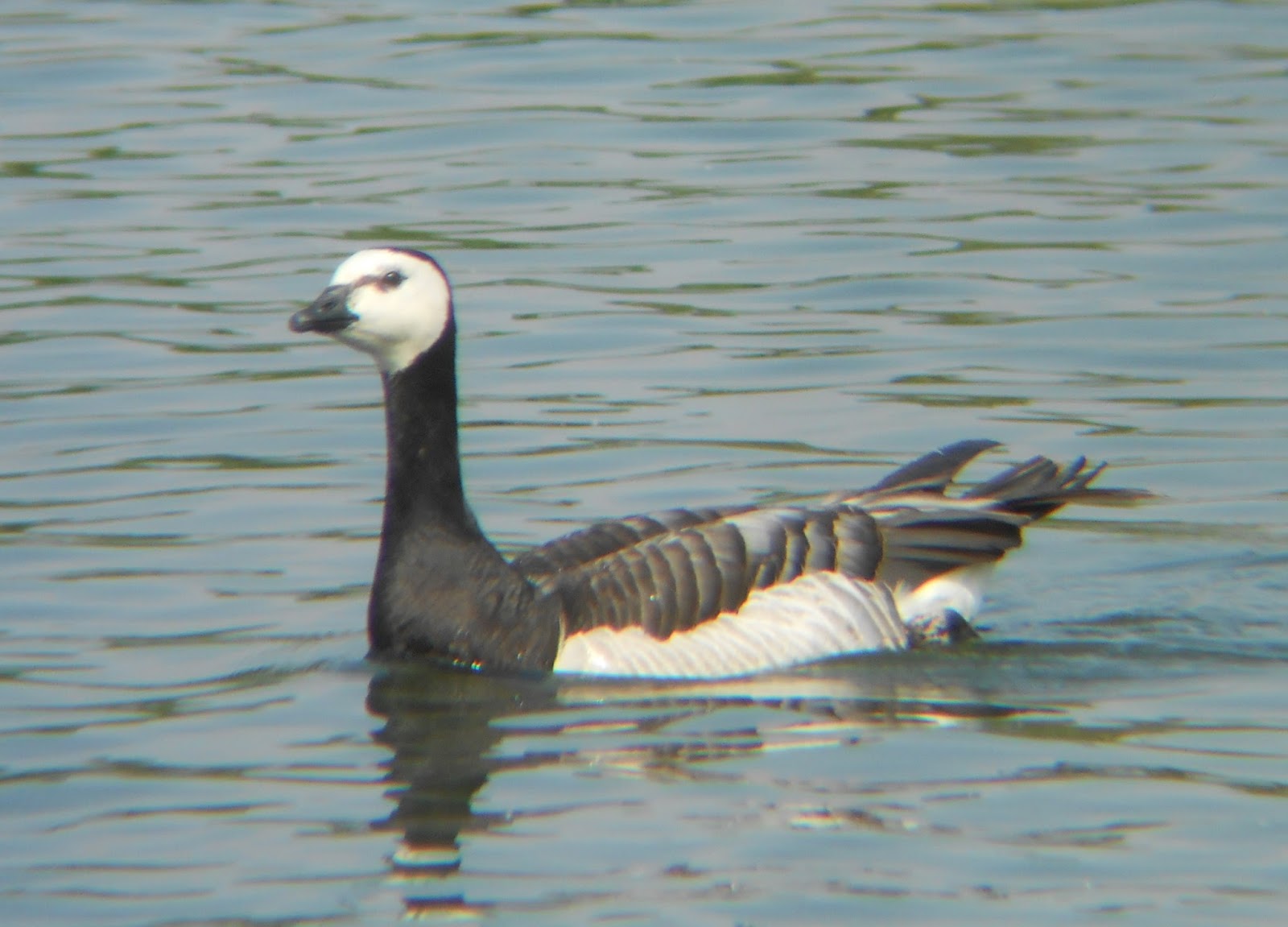
The other two birds were a pair of BARNACLE GOOSE, which were associating with the Canada Geese. Always a nice bird to see, the fact they were present within June is simply irrelevent.


26/06/13
Again, for the protection of potential breeding birds i have to hold back the site location for the following day.
After meeting someone on site i was told the news that a BARN OWL had been showing the previous night, and so therefore, i stuck around untill dusk to try to locate it. Without much effort, at 9pm out flew a BARN OWL, which continued to show for an hour or so following, including once dropping into tree's to perch.


Superb flight views were had as it flew around the field.


27/06/13
A nice patch visit was highlighted by the two drake Mandarin Duck which are currently moulting along a stretch of the river, they often give stunning views as usual with the patch Mandarins.


In other bird news, the first returning Common Sandpiper of the year was showing, as was a single Grey Wagtail and Kingfisher. An escappe Zebra Finch was also found feeding adjacent to the quarry with the  Greenfinches.


28/06/13
3 Mandarin, the two eclipse drake and a female were showing on the river.
MB

MB